The emergencies
Heatstroke and snakebite, the first minutes
The signs in the order they arrive, the cooling that helps, the handling that loses time, and the drive planned before it is needed.
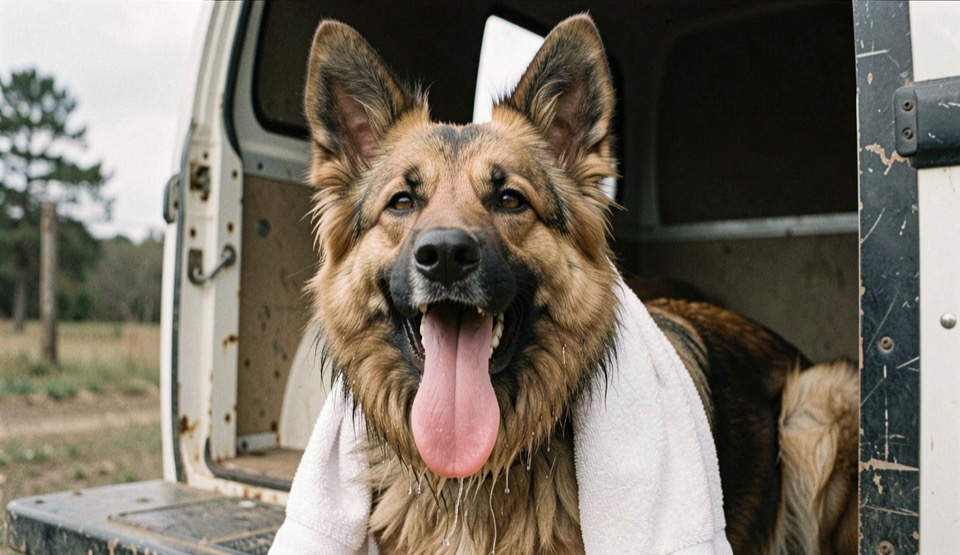
Heatstroke and snakebite are the two Southern emergencies where the owner's first minutes change what the clinic can do afterward. The moves are few, quiet, and aimed at one thing: getting a cooler, calmer dog into the truck and onto the table. Nothing in this page replaces the clinician; it exists so the drive to the clinic is not the first time the moves are considered.
The prevention behind these minutes is its own subject: the year round regime that keeps the dog out of the worst of the season is year round prevention, and the yard that decides before the heat does is described in yards, shade and water.
Reading a heatstroke in order
Heatstroke in a dog tends to announce itself in a sequence owners can learn. Heavy panting that will not settle comes first, with drool thickening and the tongue hanging wide. The tongue and the gums may go bright, then the walk turns wobbly and the hind end sways. Vomiting can follow, and collapse is the late sign; a dog that has collapsed in the heat is a dog whose minutes are already expensive. The sequence is the point: the response belongs at the first stage, not the last.
Cooling that helps, cooling that harms
The helping moves are plain. Out of the heat and into shade, real shade, with air moving: a fan, a breeze, the air conditioning of a running vehicle. Cool, not cold, water on the places the blood runs close to the surface: the belly, the groin, the paws. Water to drink, offered, in sips, never forced. Then the drive, with the cooling continuing. Ice water and ice baths are the classic error: they drive the surface vessels closed, the heat stays inside, and the shivering dog arrives in worse shape than the hot one. Aggressive cooling that continues after the dog has steadied has its own harm, so the cooling eases as the dog does.
The drive that decides
What makes the drive worse is easy to list: a dog struggling in a crate with no airflow, sun through the windows onto a dark seat, stops to do anything except drive. What makes it better is the same list inverted: airflow, a wet towel, the call ahead so the clinic is ready at the door. In much of the South the nearest emergency clinic is an hour and a half away, which is exactly why the call ahead and the route belong to the days before, not the day of.
A snakebite: quiet beats everything
The useful moves after a snakebite are the quietest ones in first aid. The dog stays still and is carried, not walked: movement moves the venom, and the walk from the yard to the truck is walked by the owner. The collar comes off or loosens before the swelling arrives. The bite site is left alone; the folklore remedies applied at the site spend the minutes that matter. Then the same drive as before, steady, with the dog kept as calm as a hurt dog can be kept. If the snake is seen and can be identified from a safe distance, the detail helps; catching it or photographing it at close range does not, and the clinic does not need the snake to start.
Signs, gestures, delays
| The sign or the moment | The response | What cannot wait |
|---|---|---|
| Panting that will not settle, drool thickening | Shade, moving air, water in sips, the session over | Nothing yet, if the response starts now |
| Tongue or gums going bright, the walk wobbling | Cool water on belly, groin and paws, into the truck | The cooling begins before the packing does |
| Vomiting or collapse in the heat | Cooling on the way, the clinic called ahead | Everything; this is the drive itself |
| A yelp and swelling after grass or brush work | Still, carried, collar loosened, no remedies at the site | The drive, started within minutes |
| The dog slowing strangely on a hot day | Stop, shade, look at the tongue before the leash again | The look costs nothing and finds the first sign |
The route planned before the day
Every piece of this page works better the day before. The after hours number saved, the route known, the crate in the vehicle with airflow, the towel where a hand can find it. The summer that tests all of it is the same summer that trains in it: how the work itself moves around the heat is the subject of training in hot weather.
The summer kit
What rides in the vehicle and hangs by the door
Small preparations, large outcomes, an hour and a half from help.
- Water and a bowl that folds, for any length of drive.
- A towel that can be soaked, within reach, not under the spare tire.
- The emergency clinic's address and after hours number, saved twice.
- The dog's veterinary file, printed or photographed, current.
- A crate or restraint with airflow for a struggling dog.
- The habit of checking the back of a hand on pavement before a walk.
Keeping this page honest
The first aid above is described in general terms, without numbers, products or dosages, and it names no clinic: the moves are the quiet common core, and the clinician who sees the dog decides everything that follows. The other emergency with its own steps, a bite from another dog, is covered at after a dog attack.