Yard six
Dog event formats, and what each one tests
Conformation, obedience, rally, agility, field trials, nite hunts, dock jumping: what each format measures, who may enter, and what the letters after a name mean.
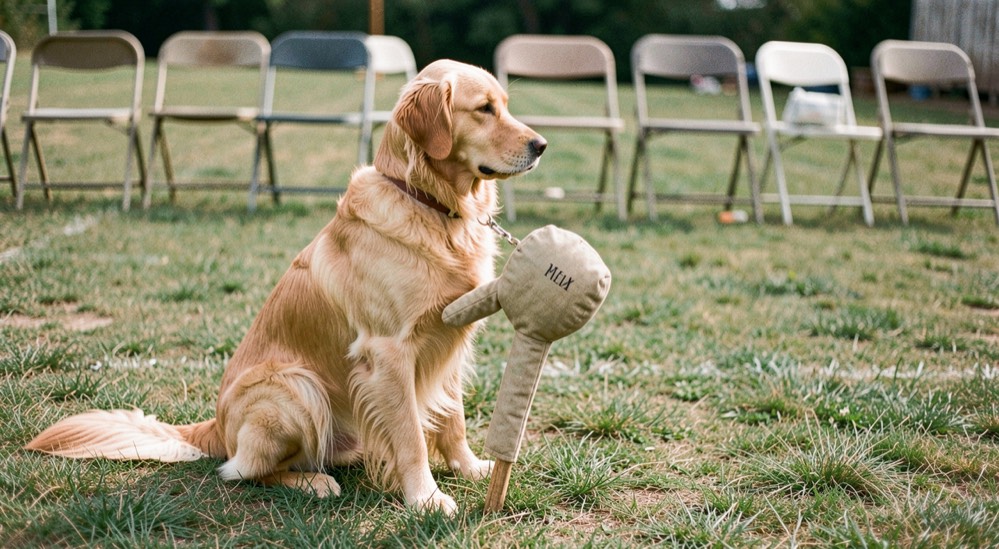
The world of dog events is a catalog of formats, and each format is a question asked of a dog in a particular way, under a published rulebook, by a judge or a clock. This gate reads the catalog: what each format measures, what entering asks of the dog and the file behind it, and what the letters the formats add to a name actually certify. It explains formats; the calendar of any given season belongs to the organizations that run them.
The catalog, format by format
Conformation asks whether the dog matches the written standard of its breed: judged against the description, in a ring, by judges who apply the same text. Obedience asks for precision, exercises in a defined order, scored against a standard. Rally runs a signed course, handler and dog moving station to station, and forgives the handler less than obedience forgives the dog. Agility is speed and accuracy over obstacles, against the clock and the fault table. Field trials and hunt tests ask for the hunting work the retrieving breeds were built for, marking and steadiness and delivery, judged against other dogs or against a written standard. Nite hunts put hounds on scent after dark and judge what they do with the trail. Dock jumping measures a jump off a dock into water, for distance or for height. One catalog, many questions, and every one of them answered by a rule someone published.
Who may enter
Entry conditions start with the file, not the dog. Identification, vaccination records, sometimes registration with the administering program: the entry form asks for the paperwork that responsible dog ownership keeps in the drawer anyway, which is why the file and the sport are the same discipline. In this climate the preparation itself bends around the heat: conditioning and training move to the windows the summer leaves open, and the method is at training in hot weather.
The letters the formats leave
A title is a claim with a receipt, and the receipt is public. Where the letters print, before or after the dog's name, is the program's own rule; what family of work they certify and where they sit on the family's ladder is the program's own definitions list; and a championship certifies consistency across entries by a formula the program publishes. The structure, and the five move habit for checking any claim against the rulebook, is decoded at dog title abbreviations.
How to read a rulebook: find the administering program's published regulations, open the section that defines the format, and read the entry conditions and the judging standard together. The published rule is the text; a club's local custom, a friend's recollection and a forum's confidence are not.
The gate and the season
This gate holds the formats and the structure behind them, and it names no club, no dog and no result, because the value here is the reading, not the scoreboard. The rulebooks themselves, with their publishers and their amendment dates, are cataloged with every other primary source this journal uses, at where to read the rules; the training year that leads to any of it starts next door at the training gate.