Yard one
Dog law and policy in the South
Dog law down here answers to your city hall before it answers to your state capitol. This gate classifies the recurring questions and points to the text that answers each one.
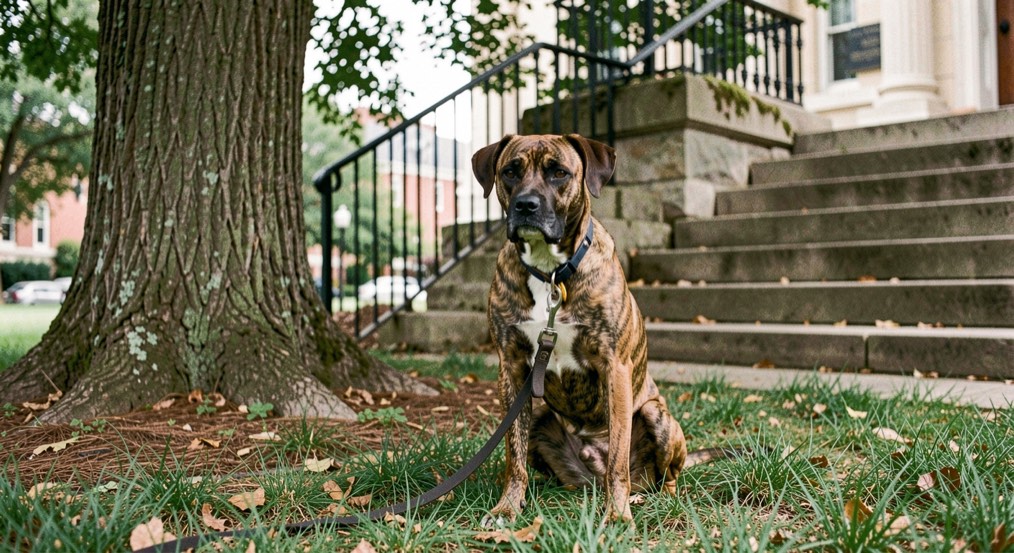
Dog law in the South answers to your city hall before it answers to your state capitol. Mississippi sets the pattern for the whole map: the state code holds no dog bite statute and no state dangerous dog statute, so the rule that reaches most owners is an ordinance written by their own council, enforced by their own animal control officer, and read on the city's own website.
That inversion decides how this gate is organized. The questions below come back every week in one form or another, and each one has a place where the answer lives: a code section, a court decision, or a municipal article. The Southern Dog Law Table puts the answers side by side for the states of the region, and Mississippi dog laws walks through the sections that do exist, one by one.
The questions that keep coming back
Someone was bitten. Who pays? In Mississippi the rule is case law, not statute: the Poy v. Grayson, 273 So.2d 491, 494 (Miss. 1973) decision holds an owner liable when the dog showed a dangerous propensity, the owner knew of it, and the harm was otherwise foreseeable. The pages on the one bite rule unpack what that proof asks for, and how the states around us mix in strict liability.
May my city ban a breed? In five Southern states, yes, because nothing at the state level stops a council from writing race into an ordinance; Florida preempts its cities and dropped its grandfather clause in 2023. Breed specific legislation follows that map, then follows the money, because a lease or an insurance contract can restrict a breed in a state that never passed a law.
What happens to a dog picked up at large? The state code covers the collar and the tag and the five day hold; the fees, the redemption window and the enforcement calendar come from the ordinance. Mississippi leash law explains why the binding text is municipal and how to read the Animals article of your own code.
Miss. Code Ann. section 21-19-9 is the hinge of the whole gate: it lets a municipality regulate animals at large running on streets and public places, and it lets the city go further than the state. Read it once and the legal map of the South stops being a puzzle.
How a rule earns its place here
Every claim on this gate carries the section that says it, and every page carries the date the desk last opened the text. When a bill moves, the trace lands in how a bill becomes law, which follows a text from filing to codified section, and in the Notebook, which notes each move as it is checked. When the text is silent, the page says so in as many words: the statute does not say.